
Recently St James’ Church have been spring cleaning their admin offices and as a 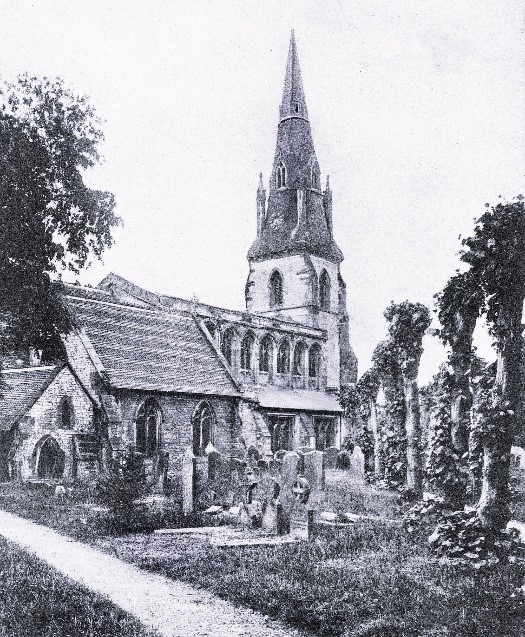 result have offered the Heritage Collection numerous copies of the Southam Rural Deanery Magazine. This was published each month by the Rector and offers a fascinating insight into life in the town a little over 100 years ago.
In 1920 the town was still recovering from the massive impact of WW1, during which nearly 900,000 British soldiers were killed. The 1921 Census showed Southam as having a population of 1,744 people, approximately one-fifth of today’s figure, so it was a much smaller and more closely knit town. Without today’s means of communication and with few motor vehicles, life was much more inwardly focussed on the town rather than on Coventry, Leamington Spa, Warwick, Rugby or Banbury. Also, social customs were very different.
In the January 1920 edition there is mention of a wedding being held in the Church on Christmas Day 1919, not something I can recollect happening in my lifetime. There was also a long list of 67 children getting prizes for attending Sunday School regularly.
1920 also saw the implementation of Parochial Church Councils, which effectively gave the Church of England laity a say in the management of the financial affairs of the parish and the maintenance of the Church and Church Hall (not that Southam had one). 500 people in the town were eligible to vote in the elections (people had to fill in a form like today’s electoral roll). 40% of those elected to the Council were women, which is not a bad figure for just over 100 years ago. It is perhaps no surprise that the article in the Magazine on this topic was followed by one on Church Restoration and associated costs, a familiar topic today.
Nearly every month the Rector (The Reverend Osborne M Jones in 1920) published a list of baptisms, marriages and funerals. One thing that stands out in these lists is that quite often one or more of the baptisms is described as “private” – apparently this means the child (or perhaps mother) was seriously ill and unable to make the journey to church, so baptism would have been conducted at the child’s home. A sad reflection on the high rates of infant and perhaps maternal mortality at the time.
A number of short articles in the Magazine focus on the activities of local groups, mainly female, and their work in providing social support for townspeople. One article on a Mothers’ Union meeting (held in the old Court House, which still stands disused at the back of the Factory Shop) stressed the part played in the early days of the war when there was only 9 weeks supply of food available in the kingdom, and went on to emphasise ‘… the need of early training for the children in Self-control and Obedience…’ Even Christmas was very different from today.
Southam Heritage Collection is located in the atrium of Tithe Place opposite the Library entrance. We are open on Tuesday, Thursday, Friday and Saturday mornings from 10am to 12 noon. To find out more about Southam’s history, visit our website www.southamheritage.org telephone 07710 015052 or email southamheritage@hotmail.com You can also follow us on Facebook.
|
Southam Heritage Collection Christmas Raffle Tickets now on sale at £1 each in the exhibition room in Tithe Place atrium (opposite the entrance to the Library)
Please support your local history museum Registered Charity No 1173033 |
Leave A Comment